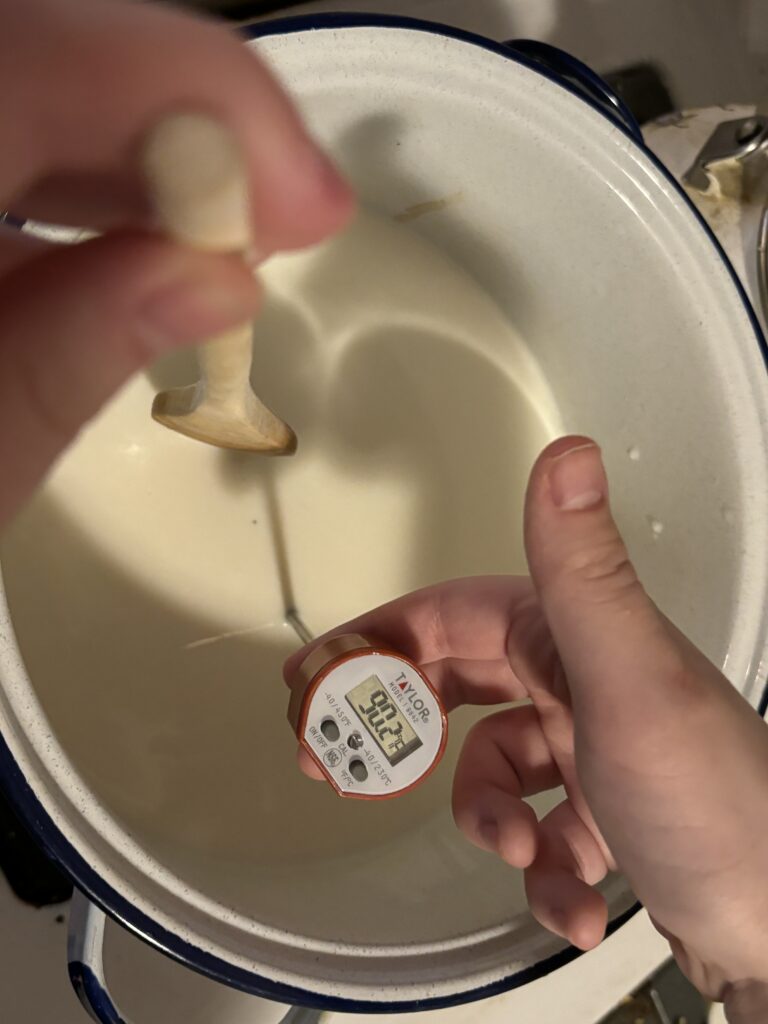
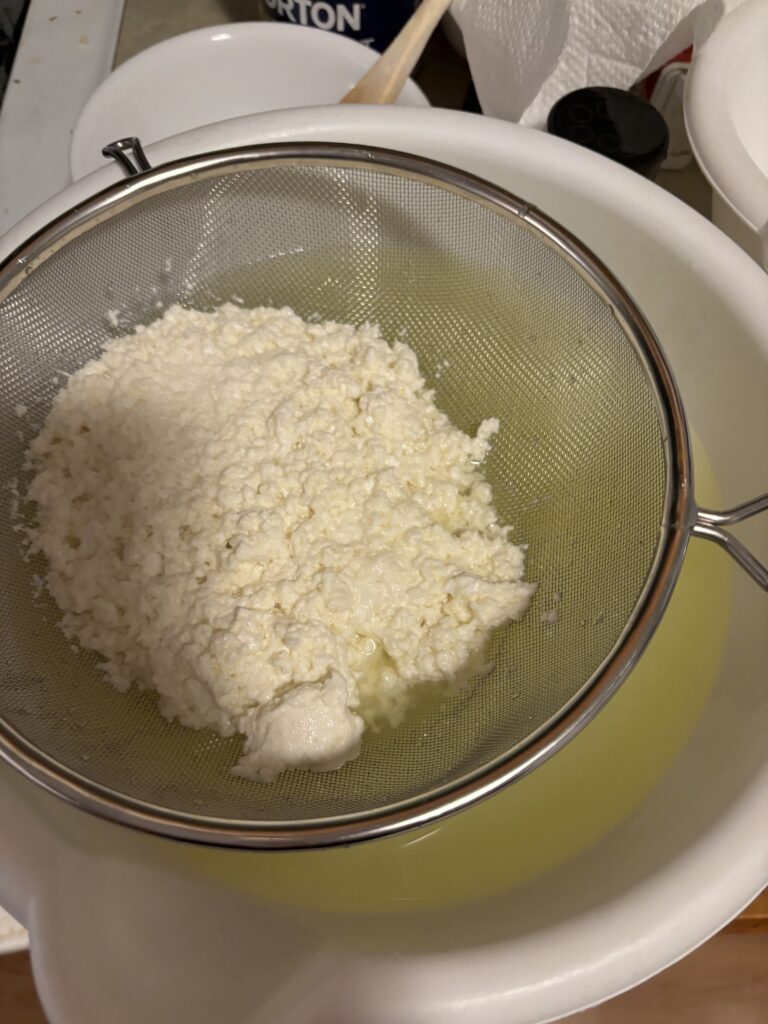
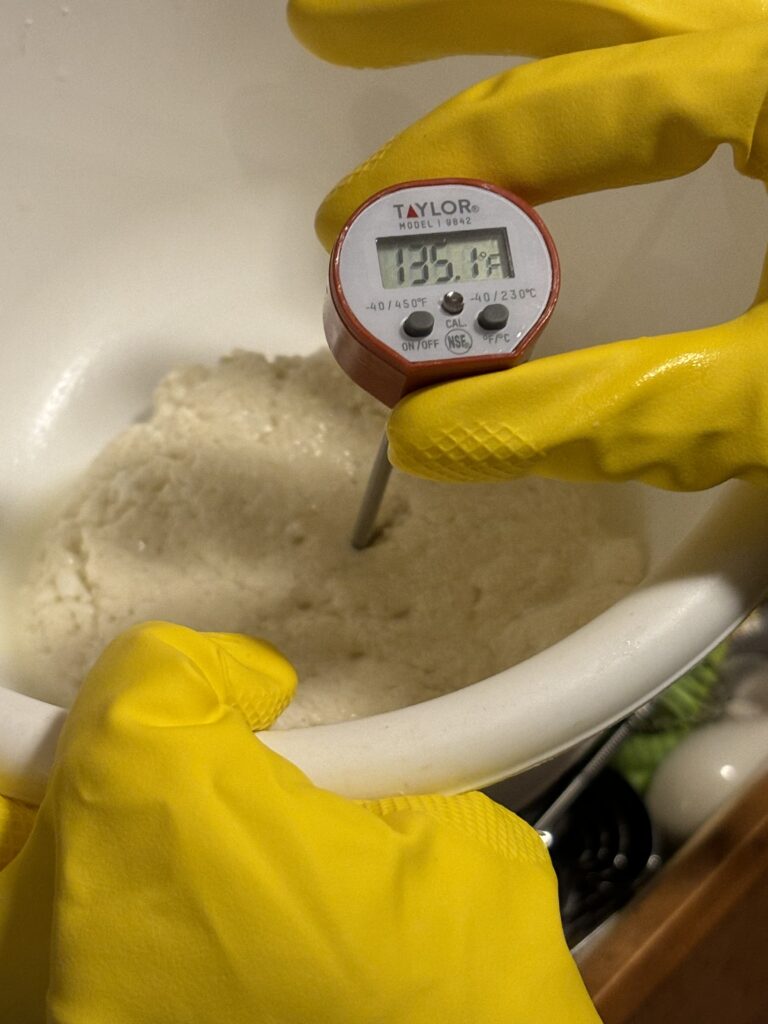
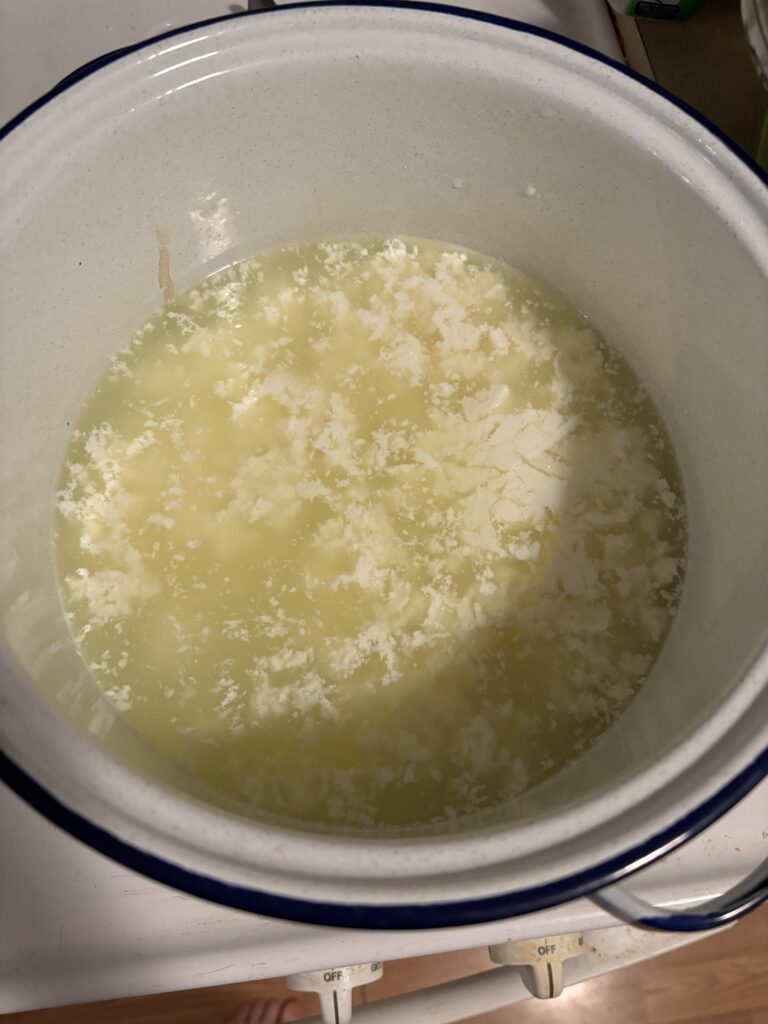
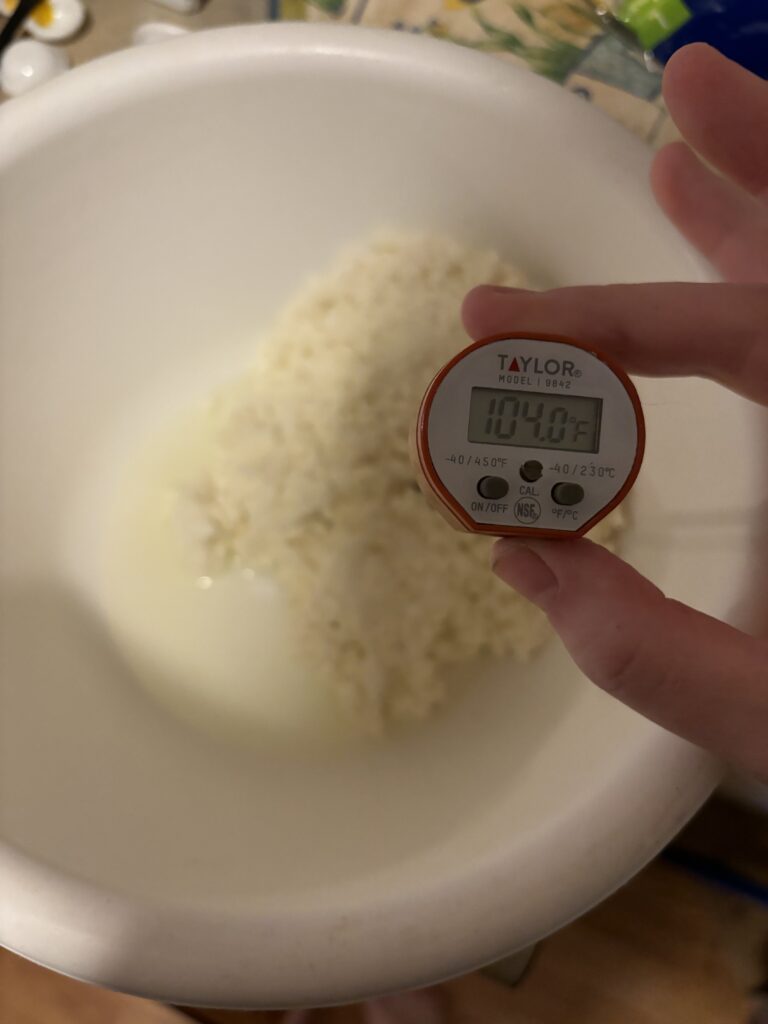
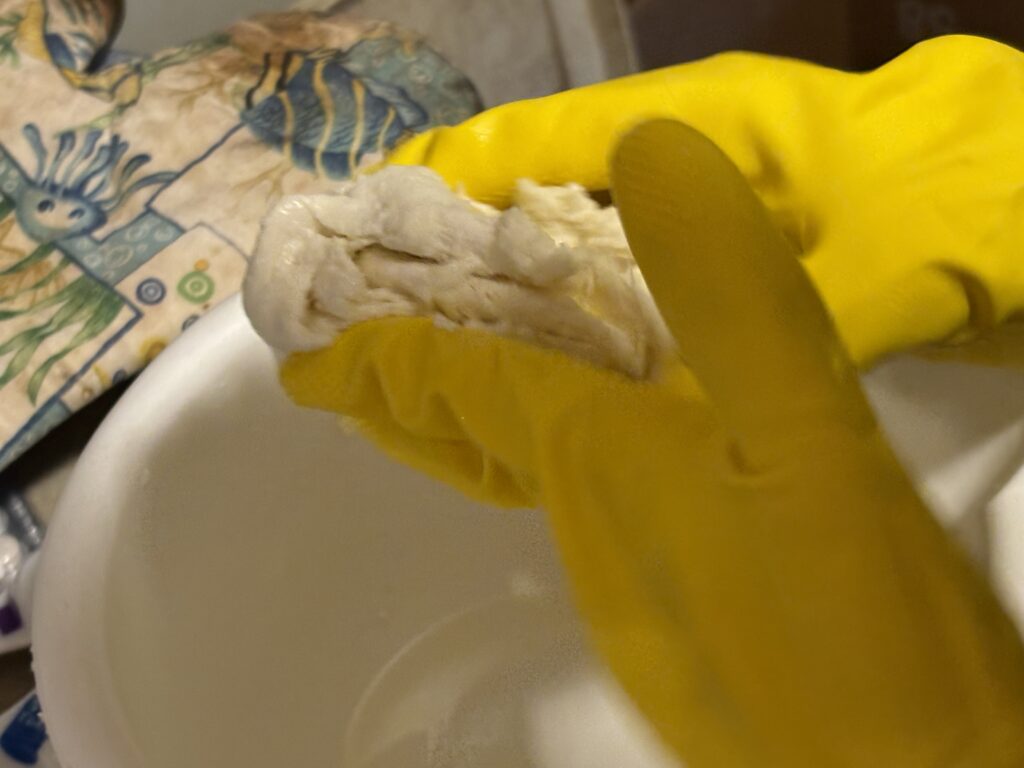
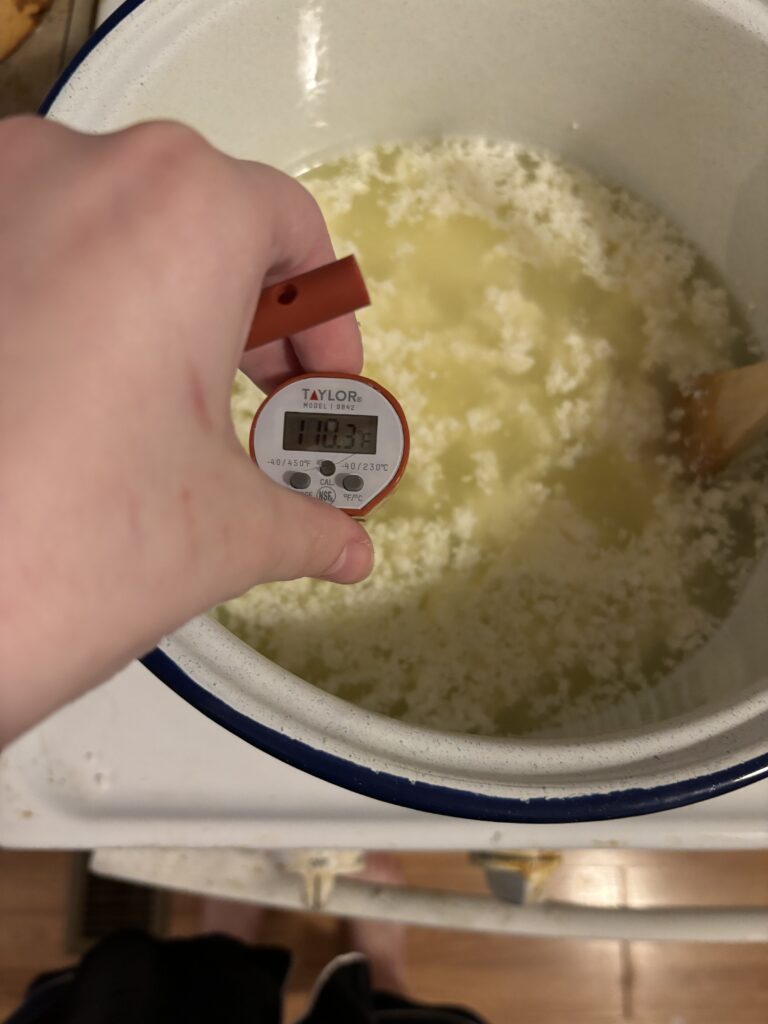
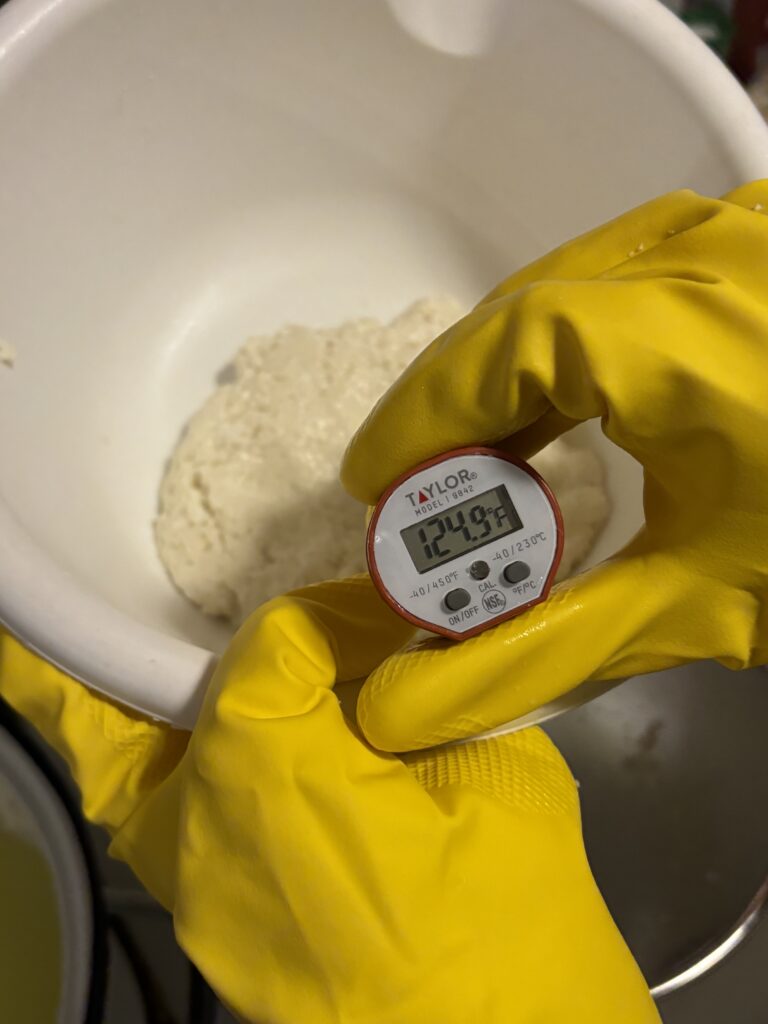
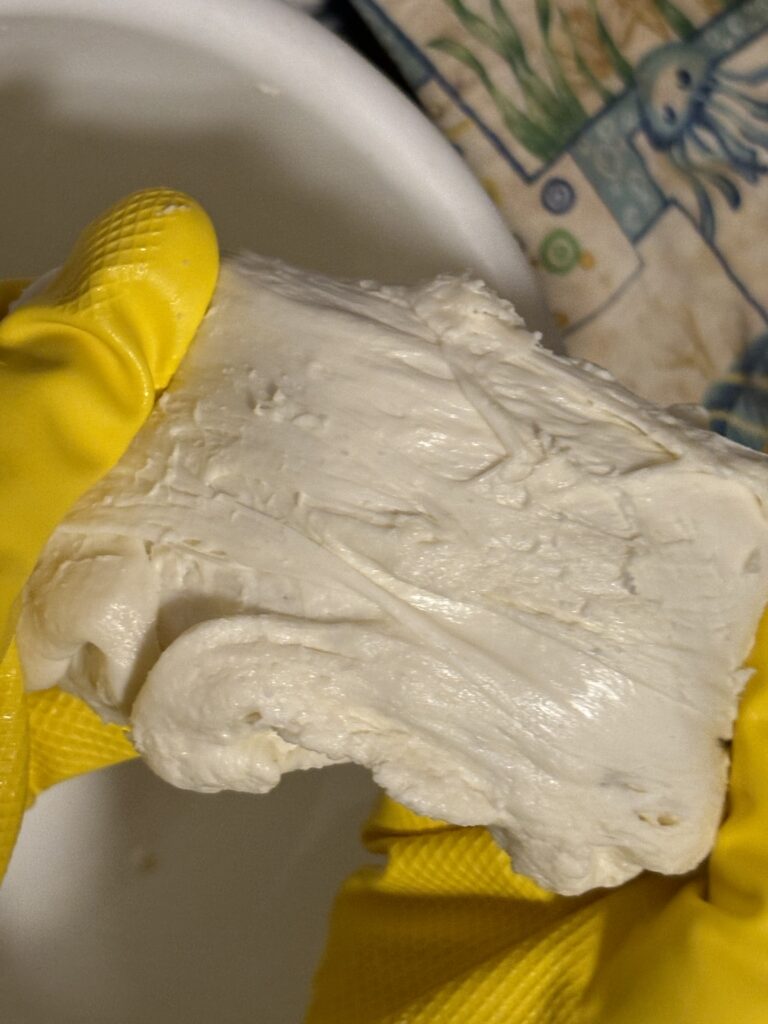
Closeups of the cheese (please excuse my dirty stove)
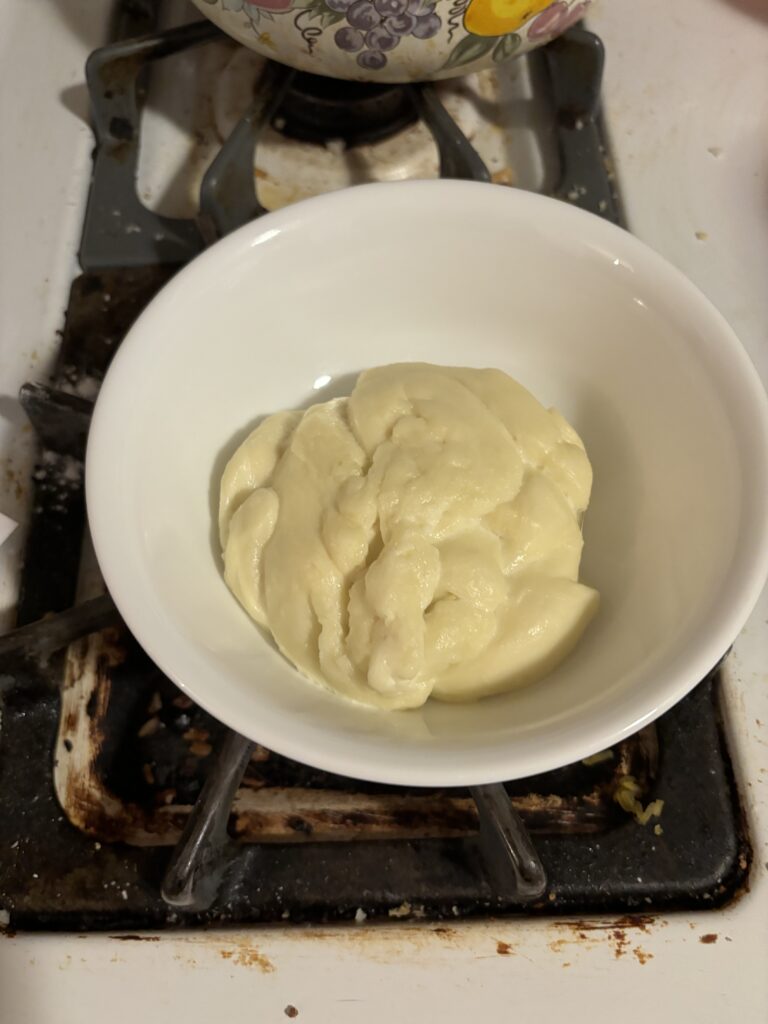
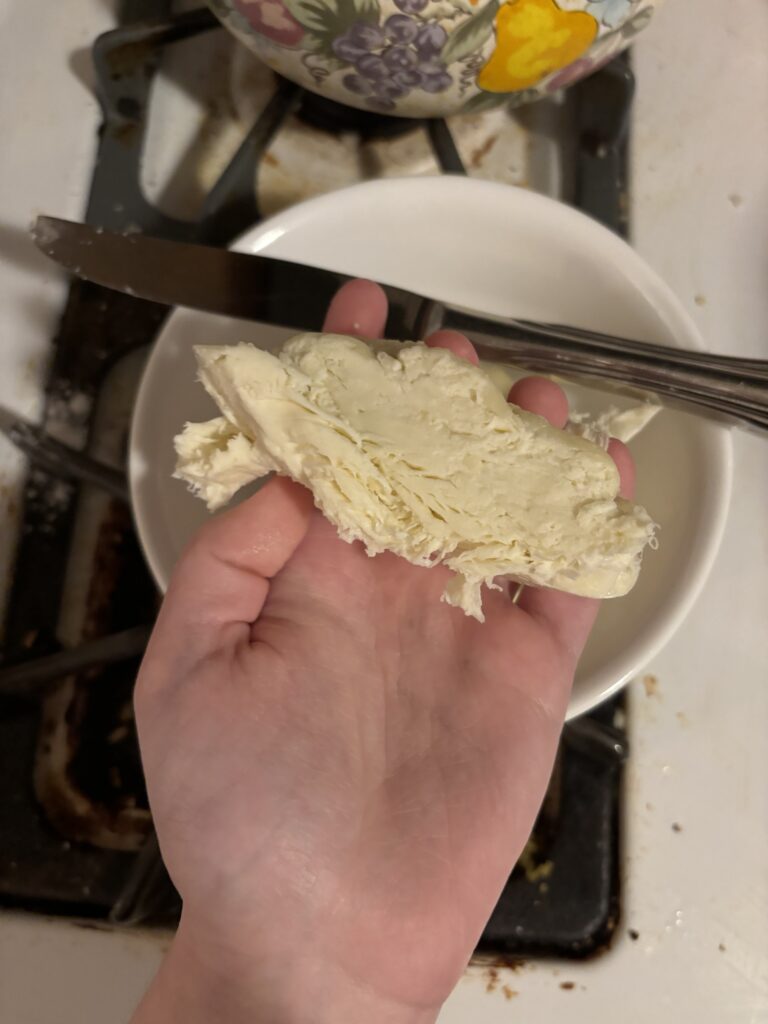
What are curds and whey? provide a chemical explanation
Hopefully I can explain this right. Curds and whey are a result of the milk denaturating in response to acid being added to it. As the protein molecules in the milk denature, clumps of protein will coagulate forming the curds all while water/H2O molecules are being formed separately from the curds, having a yellowish color and being called whey. As a by product of the chemical reaction formed by adding acid, curds and whey formed.
Why did you add “acid” to the milk? provide a chemical explanation.
Cirtic acid was added to the milk to start the denaturation process of the casein in the milk to start breaking it down into curds and whey.
What is rennet? And what was the purpose of adding it?
Rennet is an enzyme. So for one thing it helped speed up the process. It also helped break up the peptide bonds in the milk and denaturation process. Even in the slides, we see that having both the acid and the rennet in the curds together form a more uniform, smooth texture, as supposed to just having the acid which left the milk more bumpy (like in the ricotta picture). Rennet helped break the peptide bonds in the milk and also give the cheese a uniform texture.
It is possible to make cheese with “raw” milk – that is, milk that has not been pasteurized. What differences could we expect from cheesemaking with raw milk?
From looking at Dr. C’s blog, I think making cheese using raw milk would produce more curds and less whey. Unlike pasteurized milk which had gone through the process of being heated to a specific temperature once before and thus has been heated to a point where bonds in proteins like casein have been solidified. When we heat up raw milk, we are essentially starting the process of pasteurization for the first time and thus it would take longer less time to form the curds as it would be the first time the milk is being heated up to the temperature we are heating it up to. In an attempt to make an analogy, I’m going to bring metal in to use as an example for what I’m trying to say. When you take a paper clip and unbend it, it doesn’t break. But if you keep bending it in that spot where you unbent it, the bonds between the metal or plastic in the wire gets pulled apart and weakens to a point where they actually break. The formation of curds is kind of the opposite I think. The more we heat up milk to the point where curds form and then cool it down (i.e. pasteurizing the milk) the more the protein bonds inside the milk strengthen and, unlike with a paperclip, the harder it will get for the milk to form curds when it’s heated (hence why we need the acid and rennet to give an extra boost to break the pasteurized milk into curds). We can definitely expect for the cheese made with raw milk to taste different, and that the curds would form quicker. I feel like we would also need to use less citric acid and rennet, if we even need to, as like I said, it would be the first time we heat up the milk and not have to deal with the curds having a harder time forming.