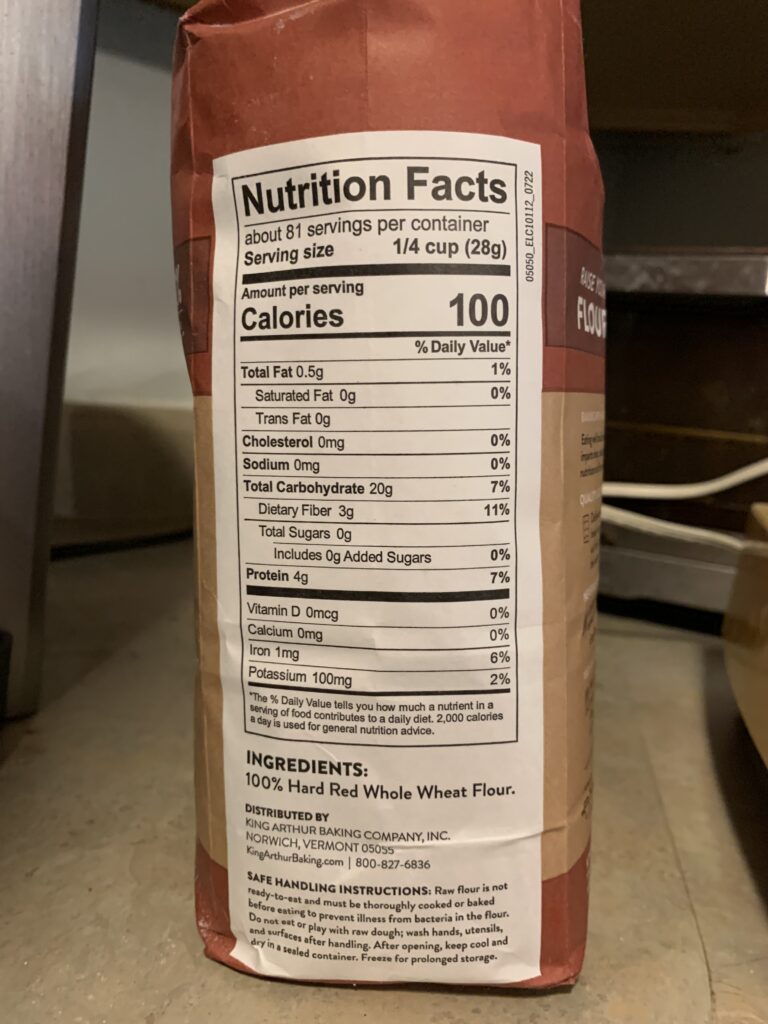
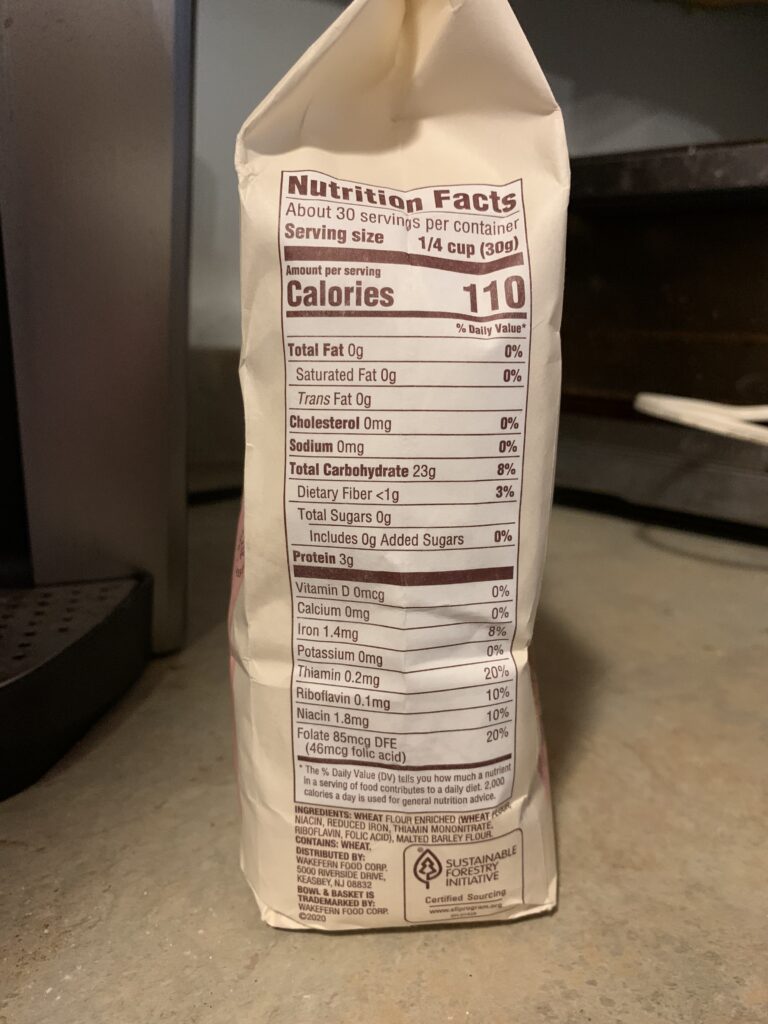
On Friday, June 7th, I went through the process of baking my first ever breadsticks. Mistakes were made. Expectations were proven wrong. What I had little hope for turned out to taste really good! So, let’s get into it! First, let’s look at the nutrition panel for the flour that I used. Both flours came from the Shop-rite brand. The whole wheat flour is the red bag on the left, and the white bag is the all-purpose-flour.
Whole Wheat Breadsticks
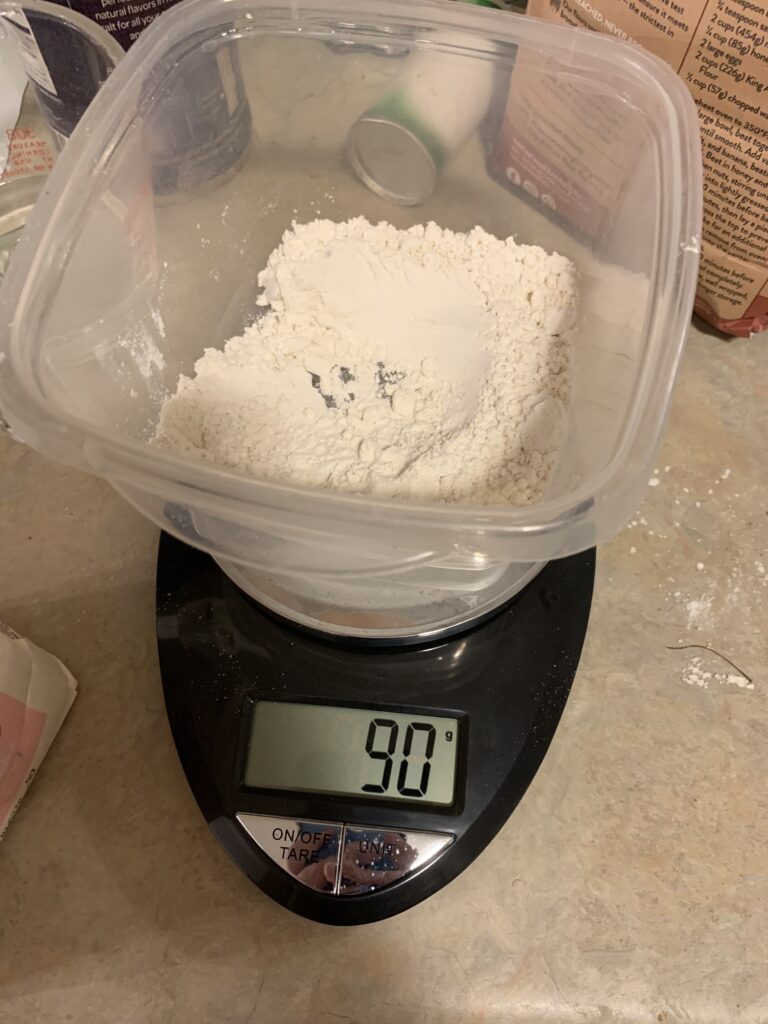
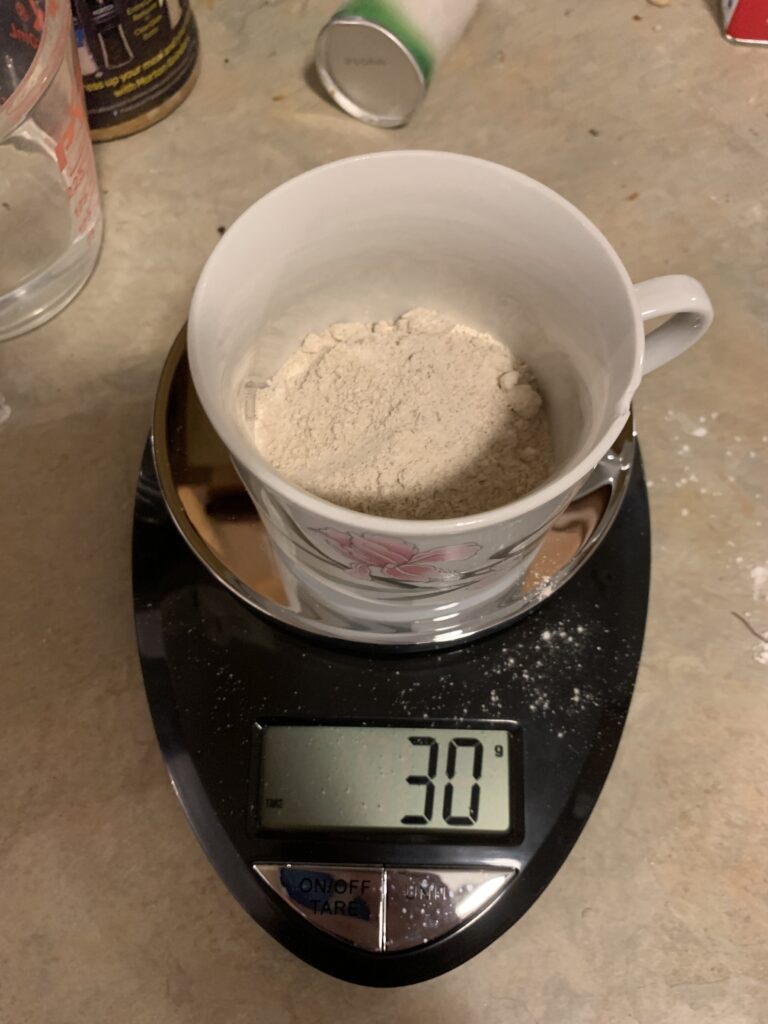
I started out by preparing ingredients to make the breadsticks made out of whole wheat flour (which is how I referred to the batch that had 1/4 of a cup of whole wheat flour in it). I used my new digital scale to measure out 90 grams of All Purpose Flour (left) and then 30 grams of whole wheat flour (right). I also had a ‘tub’ designated for the all purpose flour to hopefully prevent cross-contamination.
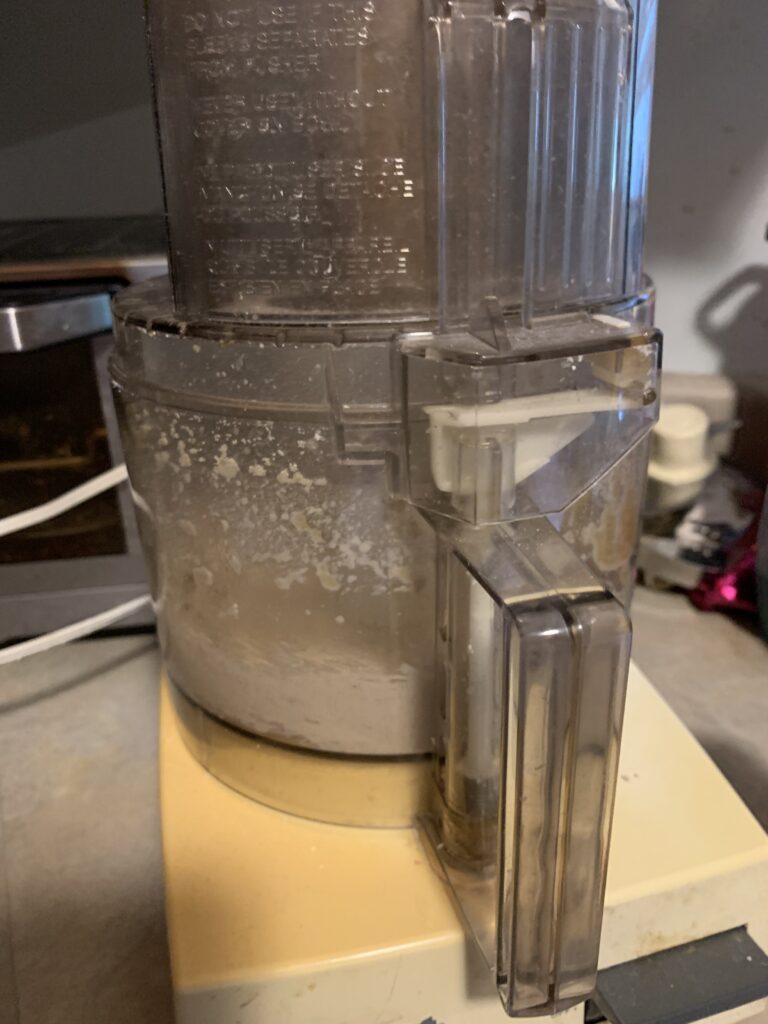
Next, I loaded the ingredients into the food processor and added the salt and yeast. With the help of my dad, I was able to quickly mix in the honey, olive oil, and water.
My honest highlight of all of this happened here. As I added in the water, I heard my dad exclaim “cool!”, and that stuck with me through the rest of the process. It had surprised me, as I’m honestly not used to knowing/doing something that my scientific dad doesn’t know. I’m used to him knowing the scientific processes and what-nots behind almost everything, especially biology and chemistry, so it’s rare to do something that he doesn’t know. It pleasently surprised me.
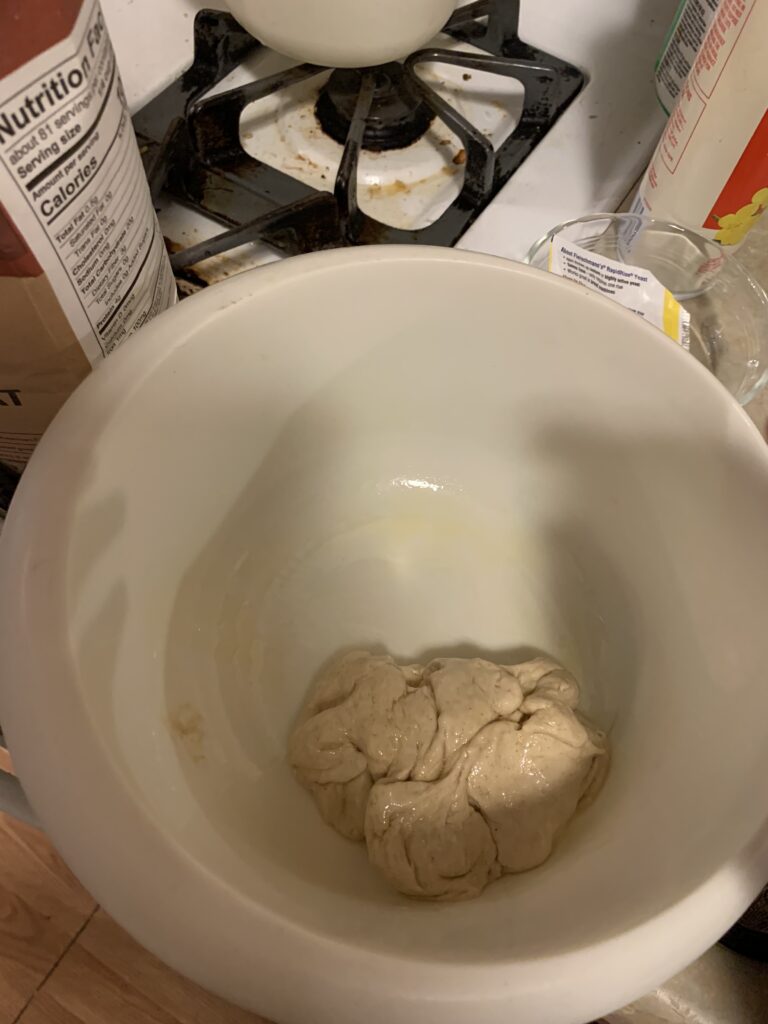
The next step is where I made my first mistake. I forgot to take a picture of the doug once I put it in the bowl before adding the olive oil. It was pretty easy to slide the dough out. You can tell that throughout the proccess, the dough kept it’s reddish brown color. I also substituted cooking spray for non-stick spray as we didn’t have any ans I thought I did.
With the whole wheat dough being put aside to rise, I began prepping the dough made out of all purpose flour.
Breadsticks Made Out of All Purpose Flour
This time, I measured out 120 grams of all purpose flour.
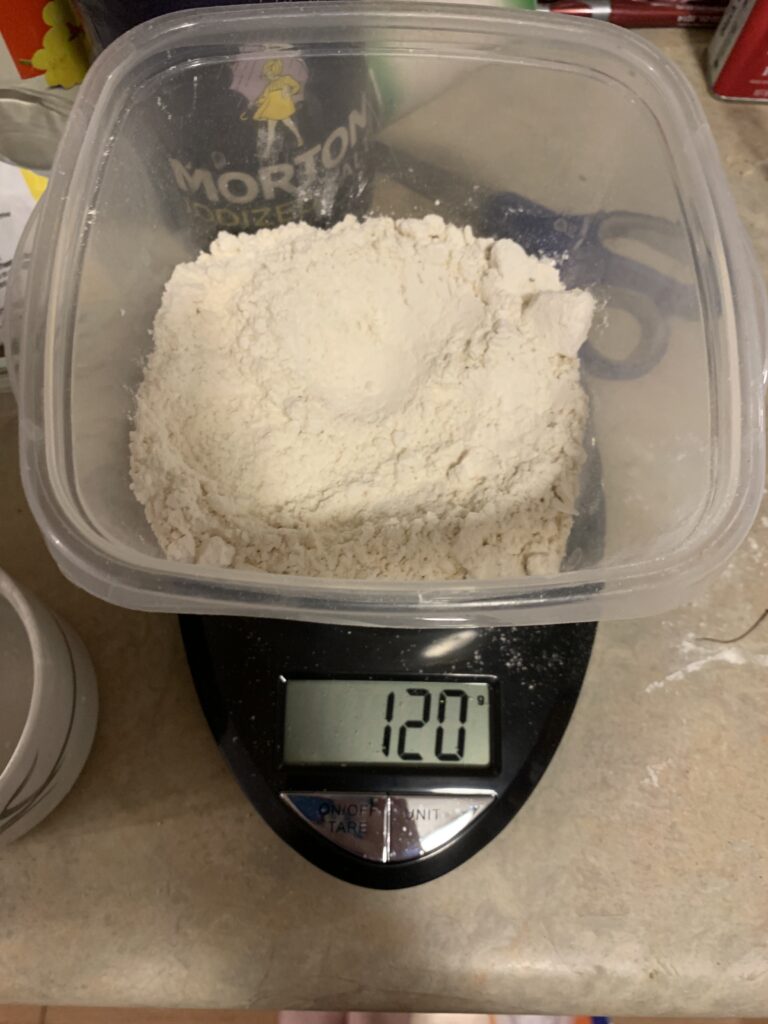
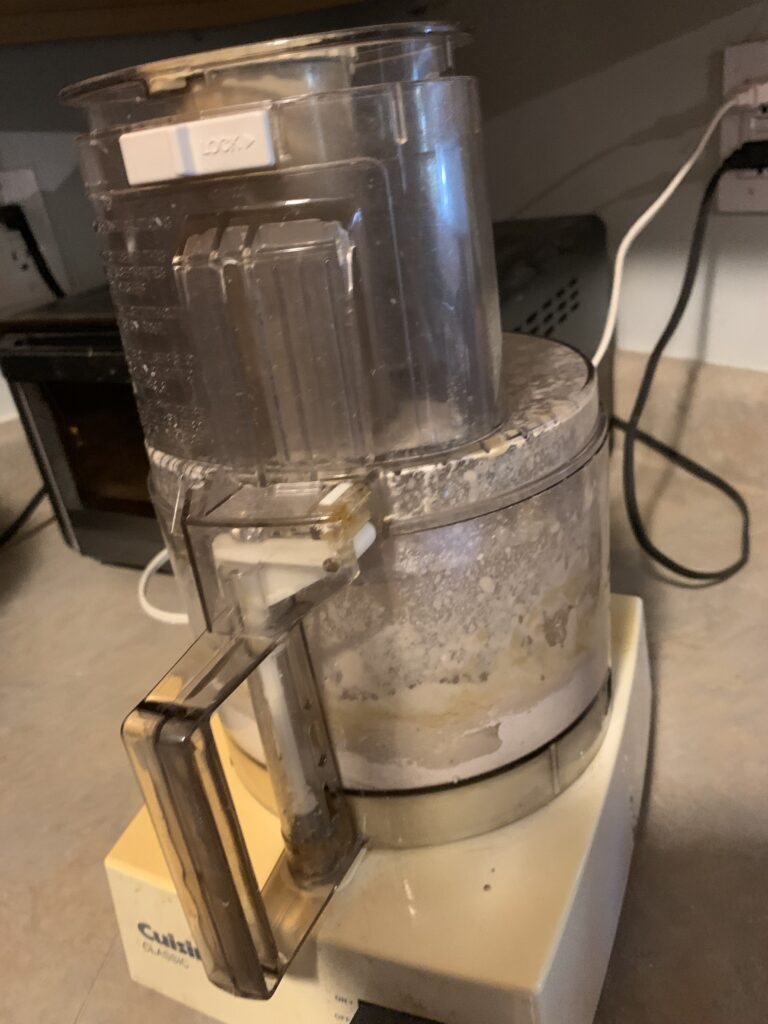
In the food processor, however, things started to go wrong. It’s not the best photo in the world, but unlike the last batch, the dough stuck to the sides of the bowl. We had timed a minute before stopping it. The only things I could think that would explain this besides the obvious difference in flour is a mistake in timing, the fact that we forgot to rinse the top of the food-processor from the whole wheat flour, and maybe slight differences in measurements between things like the level of water used or how much yeast was added (as I might have not seperated the yeast in half correctly but I am guessing that shouldn’t make much of a difference here). I could have also mixed in the ingredients differently as well, so very much human error.
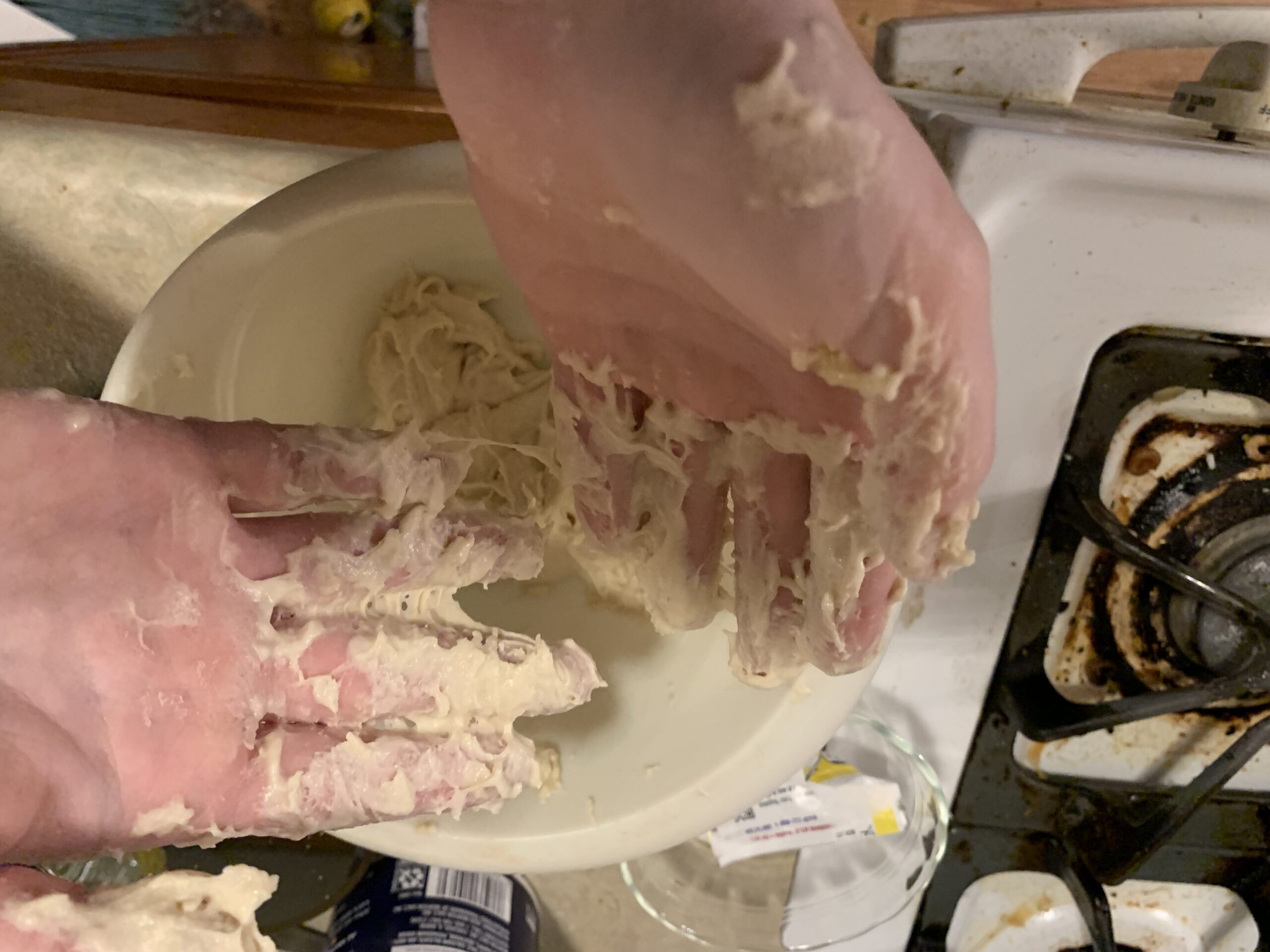
When I scooped out the dough into the bowl, the dough was really sticky and we realized we had not watched the dough peel away from the sides of the food processor like the other dough did. We tried giving the dough a few more seconds to mix in the bowl, but even that didn’t do much. You can see how much dough was on my hands just trying to scoop out the dough. I couldn’t roll the dough in oil to even remotely resemble the previous dough ball until I used the Spoonula.
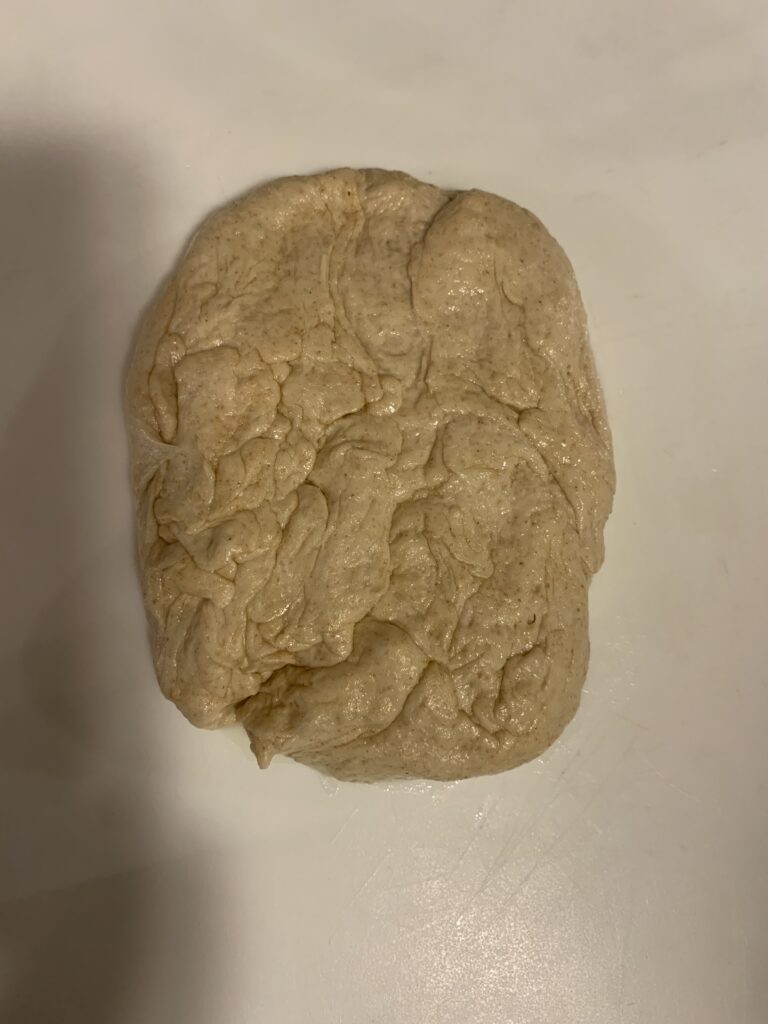
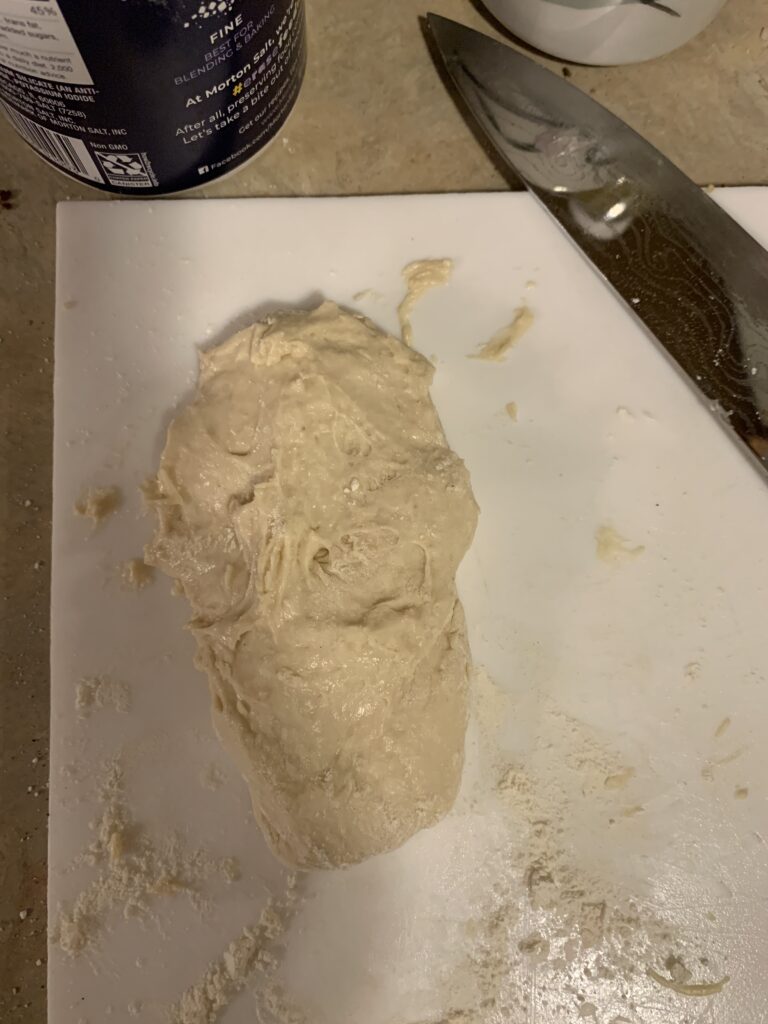
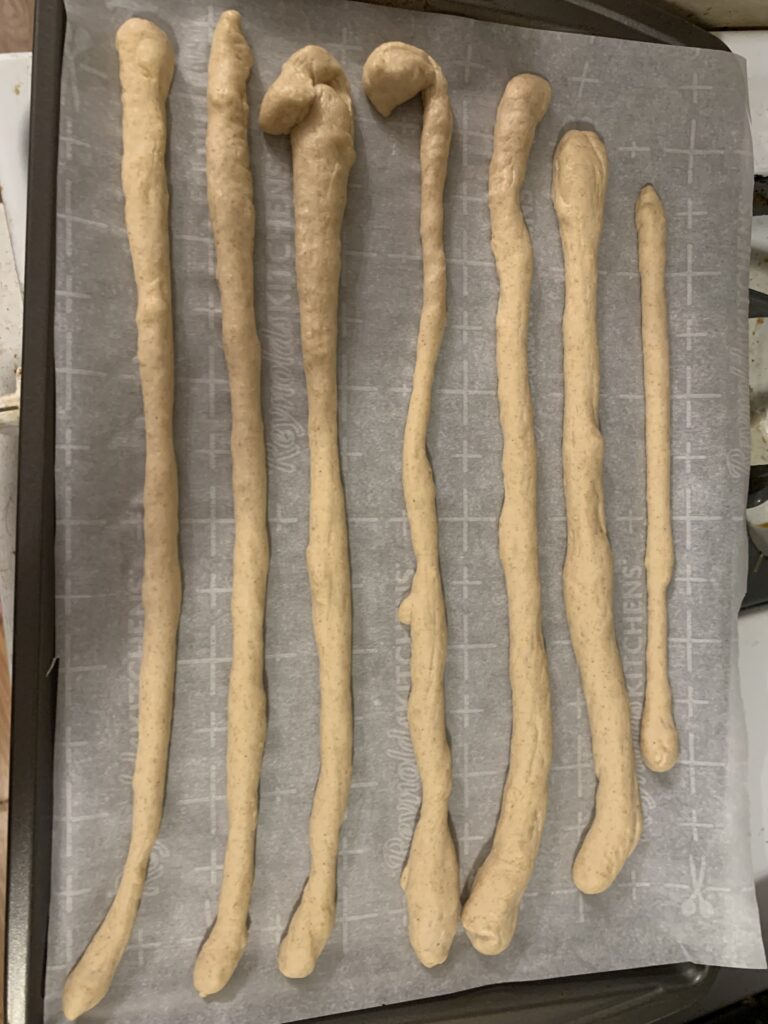
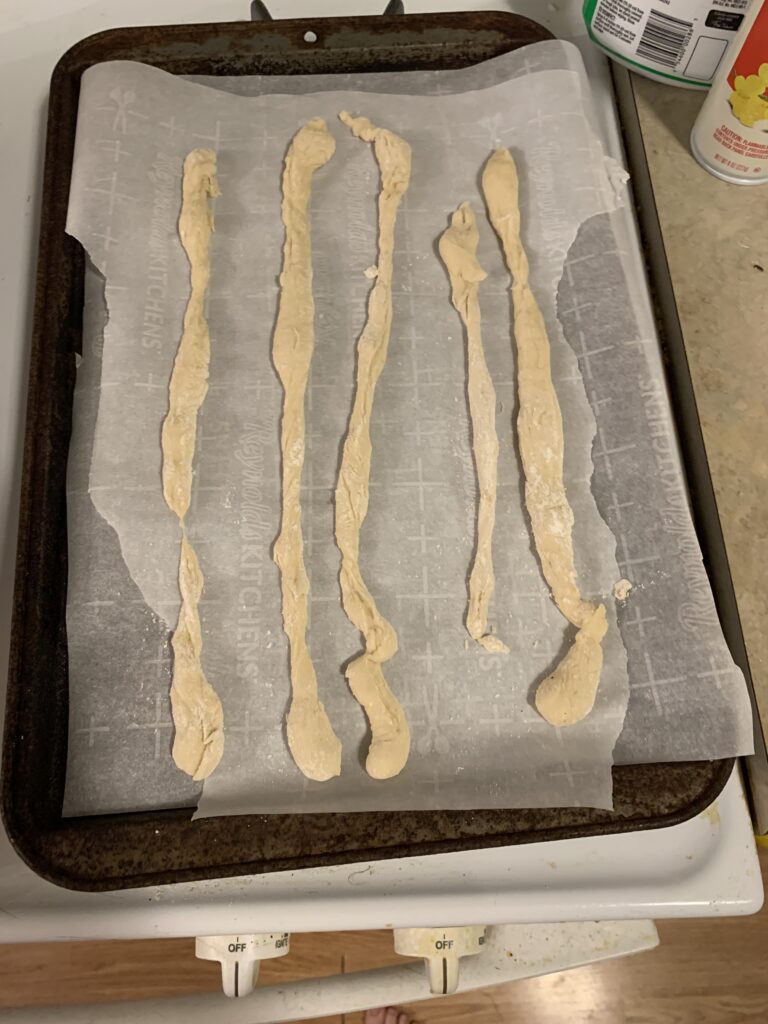
The dough didn’t really rise much after 15 minutes. Anyway, here are the two photos of the dough in a “rough rectangle”. My format is going to be the whole wheat dough on the left, and all purpose flower on the right. You can tell that even after adding more flour. the all-purpose-flour was still very sticky.
The First Breadstick
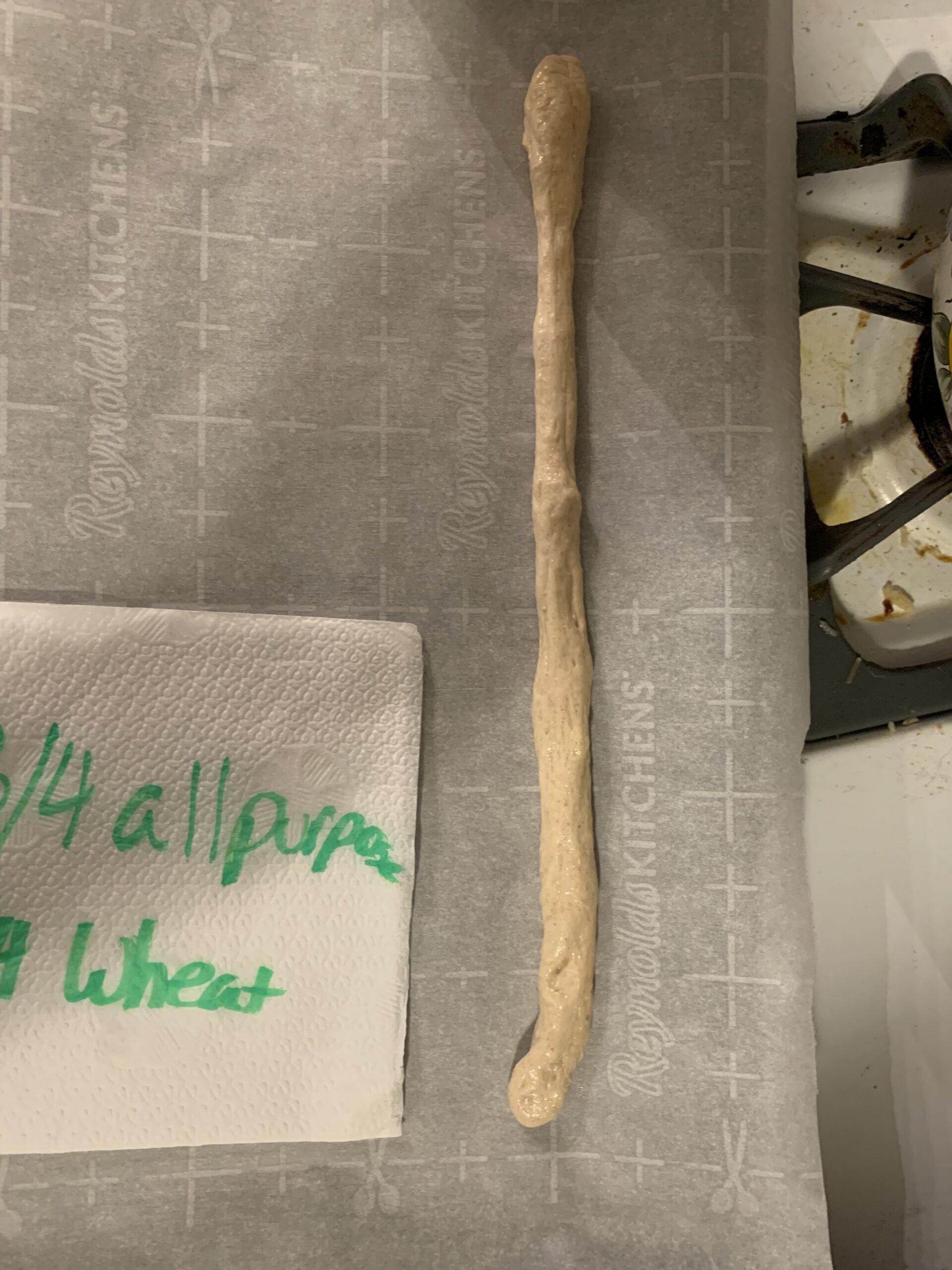
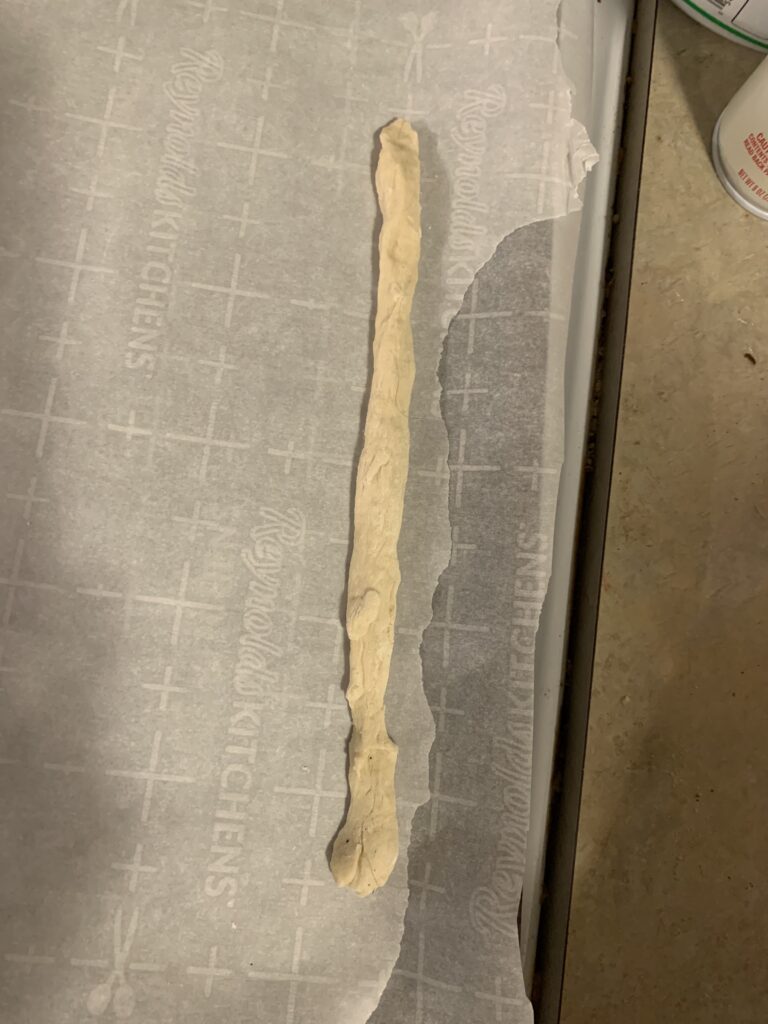
The Sticks Pre-Puff
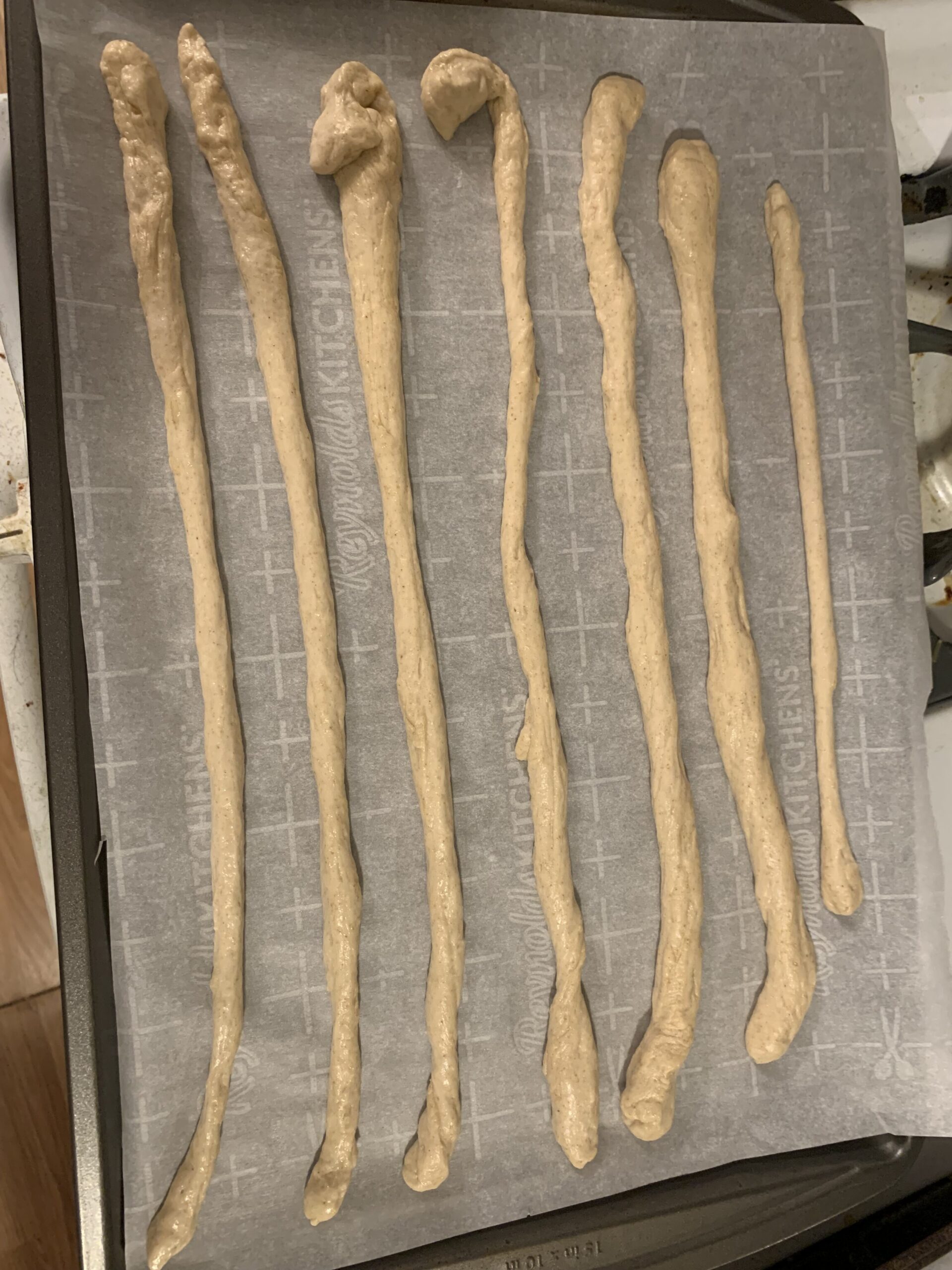
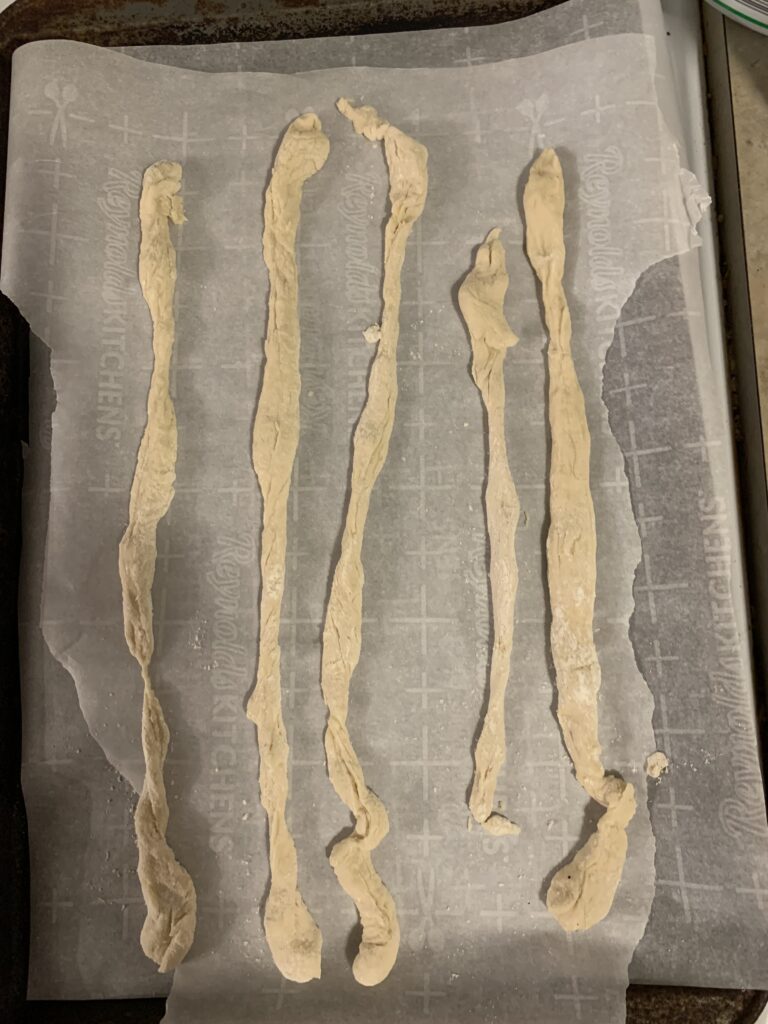
The Sticks After-Puff
This is another reason why I had “more faith” in the whole wheat dough batch. The whole wheat dough puffed up way more than the all purpose flour dough. You can definitely tell with the “before and after photos” that any big change that happened with the all purpose dough is that one stick seperated. The dough also didn’t double as much as the whole wheat dough, which I guess is pretty evident in how many “coils”(?) I was able to cut form the whole wheat dough.
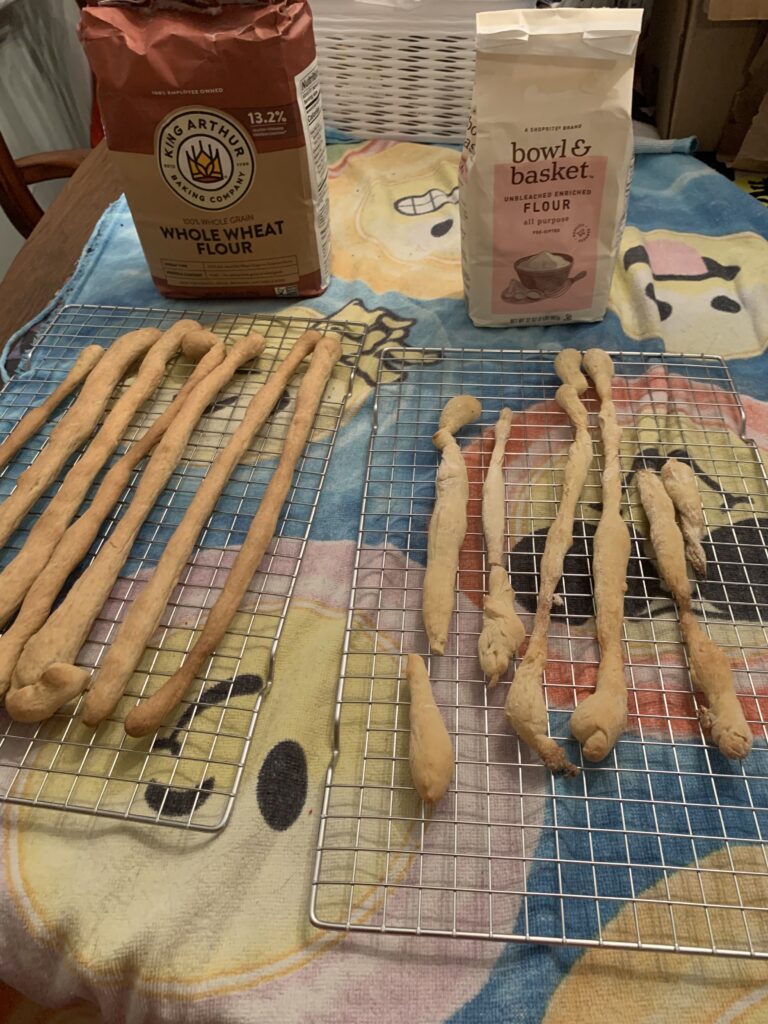
Ze Final Product!
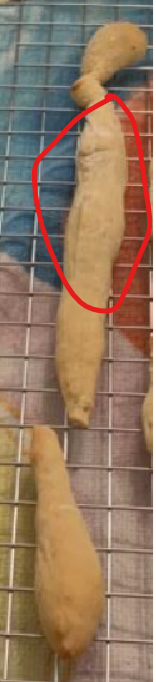
And here is the final product! The whole wheat batch went in the oven first. Due to timing, I was able to rotate the pan 180 degrees after 5 minutes. We checked on the bread 5 minutes later and my dad rotated it again as at that point I had already been working on cutting up the all-purpose dough. After another 5 minutes, my dad pulled out the first tray. We realized the breadsticks had been burned a bit. It was kind of hard to tell in the oven if it had burned as I had turned the oven light on after 5 minutes and I had decided to put the tray on the top oven rack, which was closest to the light, and also hard to see, but I had been expecting to bake the two trays at the same time. I think also having the sticks remain that reddish-brown color also made it hard to spot. For the second batch, I decided to put the tray back on the top rack as a “control” and after 10 minutes we saw that the sticks had started to burn at the thinner parts, so we took it out to cool. I don’t think the all purpose breadsticks broke as I transferred them, but they definitely did on the cooling tray when I tried to see if they were warm and also see if any part was a bit ‘squishy’ as one breadstick was both squishy in one spot in the middle and hard on the ends. I wanted to see if any other breadstick was like that. Looking back, I probably could have tried to transfer the breadsticks off the tray and keep it in the same order as they were on the tray to help do a “look at how they changed” effect and make the sticks easier to compare in their ‘journey’, but if I’m tracking the right breadstick, I think the one that was ‘squishier’ was the one that had more dough and wasn’t as thin.
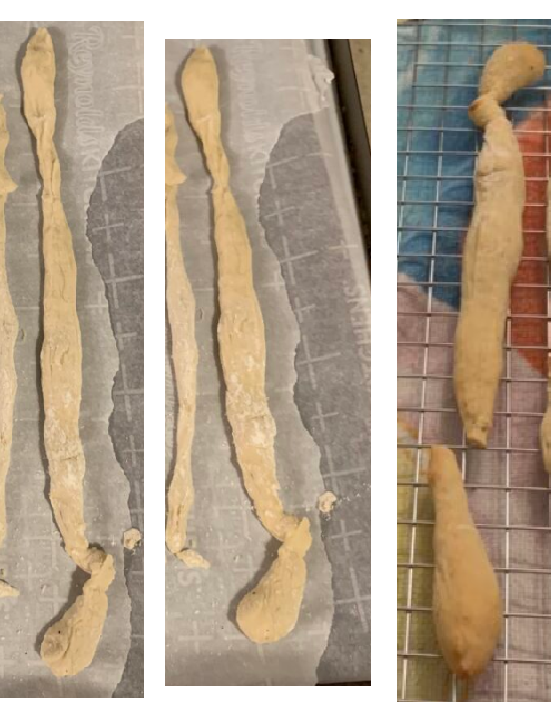
The Breadstick In Question
I tried to layout what I thought the journey of the ‘softer’ (for lack of a better term) breadstick was, circling the part that was more soft in the image on the right.
And now…for a taste test
For a reminder, here is a copy of each flour’s nutrition panel
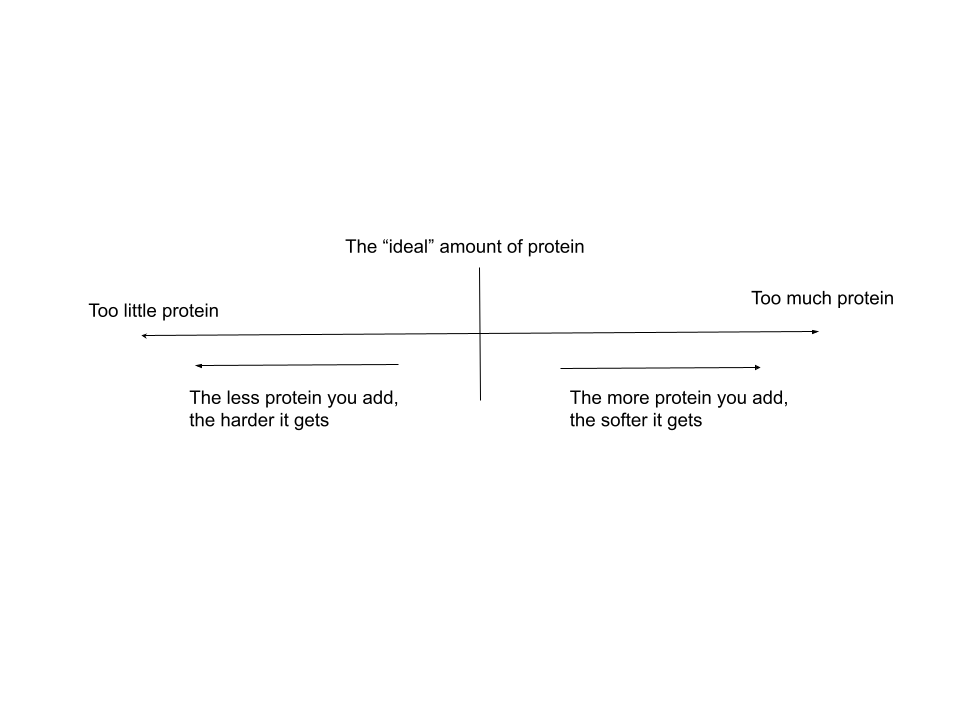
So…to what extent does the texture of the breadstick correlate with the protein content of the flour? Why do you think this is?
The protein content for the whole wheat flour was 4 grams per serving of a quarter cup. For the all purpose flour, there was a total of 3 grams of protein per serving. So, if my math is right, then there was 13 grams of protein in total in the first batch of breadsticks that I made and 12 grams of protein in the batch that was soley made of all purpose flour. The first batch was more crunchy then the other, which was more soft. This could have also been a result of me burning the breadsticks. Looking back, there was a 30 gram difference in flour content that varied between the two batches (i.e. I used 120 grams of all purpose flour for one batch and only 90 grams of all purpose and included 30 grams of whole wheat flour in the other batch). Just looking at the serving size on the nutrition label, it wouldn’t make sense for that 1 gram of protein to cause such a difference in texture. According to Oxford Languages (using a quick Google search), texture is defined as (in a noun context) “the feel, appearance, or consistency of a surface or substance” and also, for a verb, to “give (something) a rough or uneven texture”. So with that context, and with an uncertainty of how much protein was actually used in the end in this project but understanding there was at least a significant difference between the amount of protein that was in each breadstick batch, I think I can give an educated guess for my answer. The breadsticks with all purpose flour were more soft and tearable then the ones containing whole wheat (which my dad said gave more of the “breadstick” texture he was used to as they were more crunchy and hard). I think that protein content plays a huge role in the texture of the breadstick. Assuming I did everything right, which I probably didn’t, the batch that had less protein in it was significantly harder then the one that had a higher amount of protein in it. I would probably do the experiment again to try and somewhat have the same number of grams of protein in my dough to test this (i.e. I guess using math to calculate how many servings of 1/4 of a cup would equate to an equal number of grams of protein then adjust the rest of the recipe as needed), but I think that if both the batches of dough had the same amount of protein content in it, the textures would be more similar. I’m thinking of it like a scale. Having too little protein will probably most likely make the breadstick firm, as we see in the whole wheat batch, but the breadstick wil become softer the more protein you add. Probably having the “ideal” amount of protein needed in a breadstick will make a breadstick that is both hard on the outside but soft on the inside. The question implies that the amount of protein does have an impact on the texture. Adding the wheat flour caused a significant difference in the texture compared to the other batch will all purpose flour (which again could be a result of me burning it, but it only got slightly burnt on the edges and wasn’t a dark brown like on the all purpose batch), so by that logic, I think this is a logical explination for what I uncovered. I tried to make a drawing of what I mean, but I could also be phrasing my logic poorly with the wrong terms. ‘Hard’ kind of equals ‘firm’ here in my mind. I hope this all makes sense!